5.1 The Internet and its uses
The Internet and the WWW
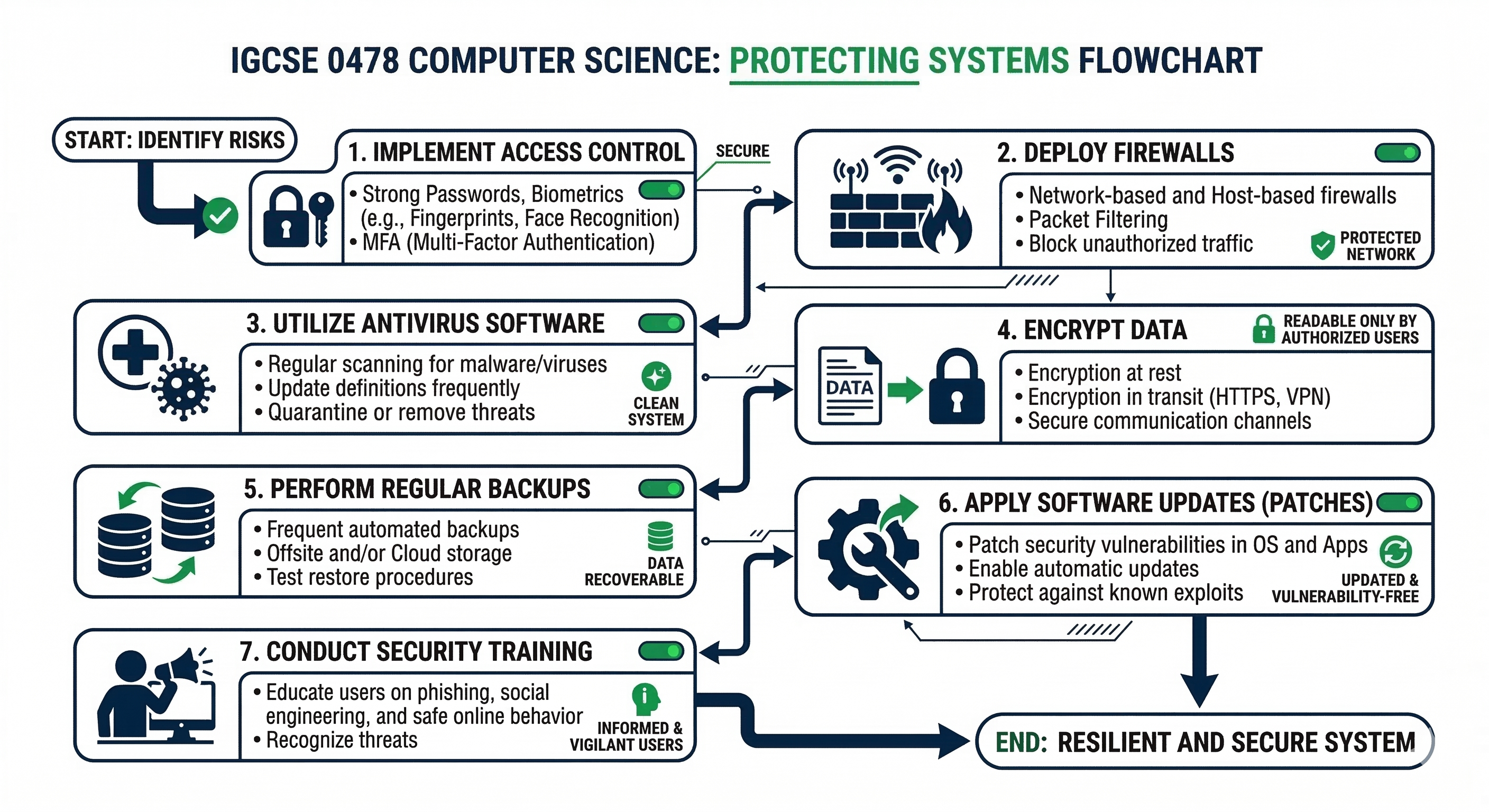
Internet vs World Wide Web
It is a common mistake to think these are the same. They are not!
- The Internet: The global network of hardware (cables, routers, servers) that connects computers.
- The WWW: The collection of web pages and HTML documents accessed via the internet using the HTTP protocol.
Web Browsers
A browser renders HTML into a visual page, stores cookies, and manages the URL (Uniform Resource Locator).
Blockchain and Digital Currency
Digital Currency
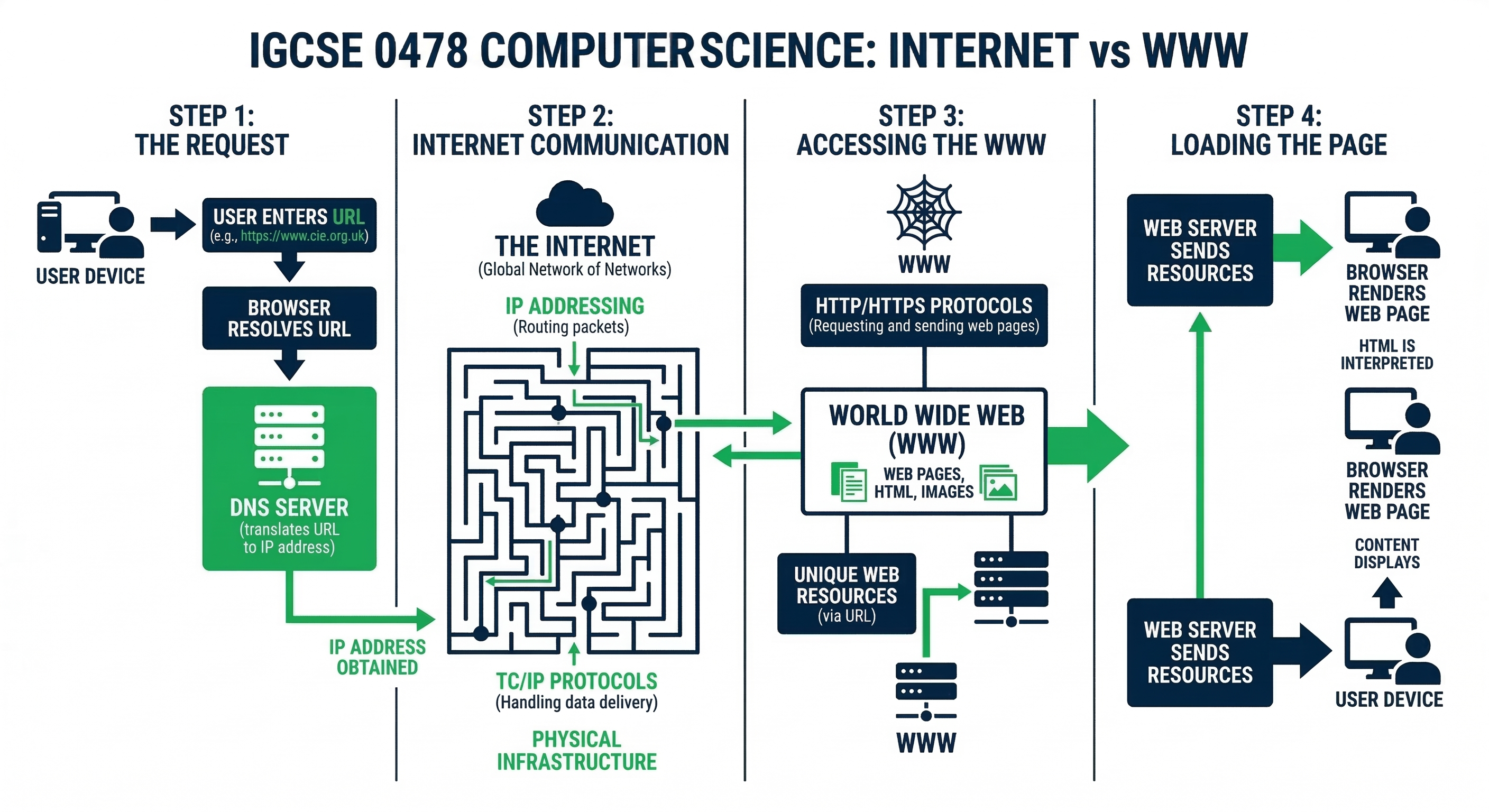
A currency that exists only in electronic form. It does not have a physical note or coin.
Blockchain Technology
A distributed ledger that records transactions across many computers. Once a "block" of data is added, it cannot be changed without changing all subsequent blocks.
Examiner Tip: Blockchain is secure because it is decentralized—there is no single point of failure.
Cyber Security Threats
Common Attacks
- Brute-force Attack: Attempting to guess a password by trying every possible combination.
- Data Theft: Stealing data via hacking or social engineering.
- DDoS (Distributed Denial of Service): Flooding a server with useless traffic to crash it.
Protecting Systems
Security Measures
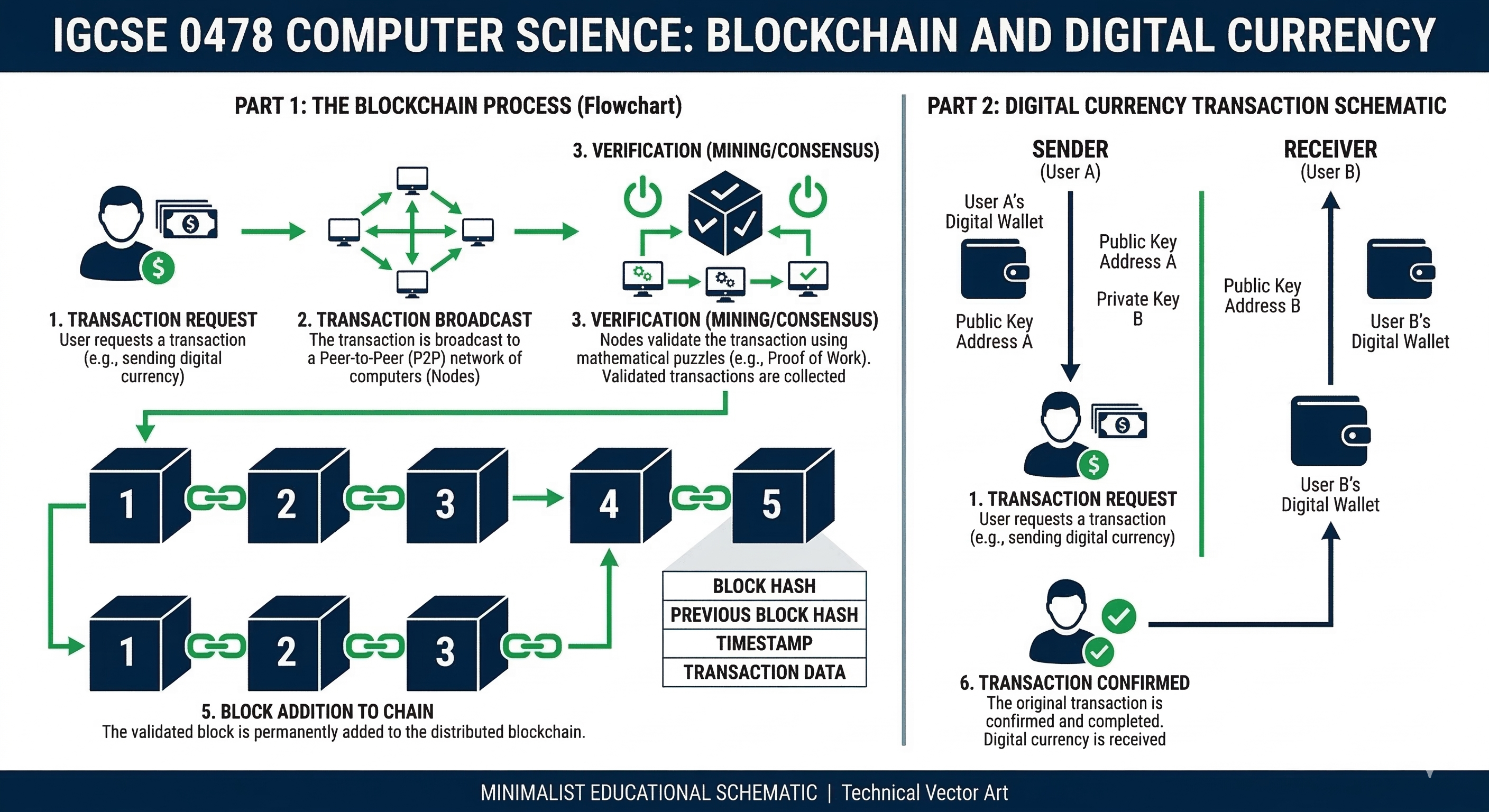
- Firewall: Monitors incoming and outgoing traffic based on a set of rules to block unauthorized access.
- Proxy Server: Acts as an intermediary between a user and the internet to hide the user's IP address.
- Two-Step Verification: Requires two different forms of identification (e.g., a password and a code sent to a phone).
- Biometrics: Using unique physical traits (fingerprints, face ID) as a password.